Session 12
Scribble Bots with 97 Students
Seven sessions with 97 students at Learning Hub. It started with a coin cell and an LED, and ended with sheets of paper covered in lines nobody planned.
- Date
- Place
- Learning Hub
- Students
- 97
- Sessions
- 7
- Topic
- Electronics
The first thing I handed out wasn't a kit. It was a coin cell and an LED. Two parts, no wires, nothing to plug in.
That turns out to be a whole lesson. Press the legs against the battery and either it lights or it doesn't. If it doesn't, you flip it around. Nobody needs a talk on polarity after that. The LED already gave it.
I keep coming back to how honest that little light is. You can't half-close a circuit. You can't sound confident at it until it agrees with you. It works, or it quietly tells you something is off.
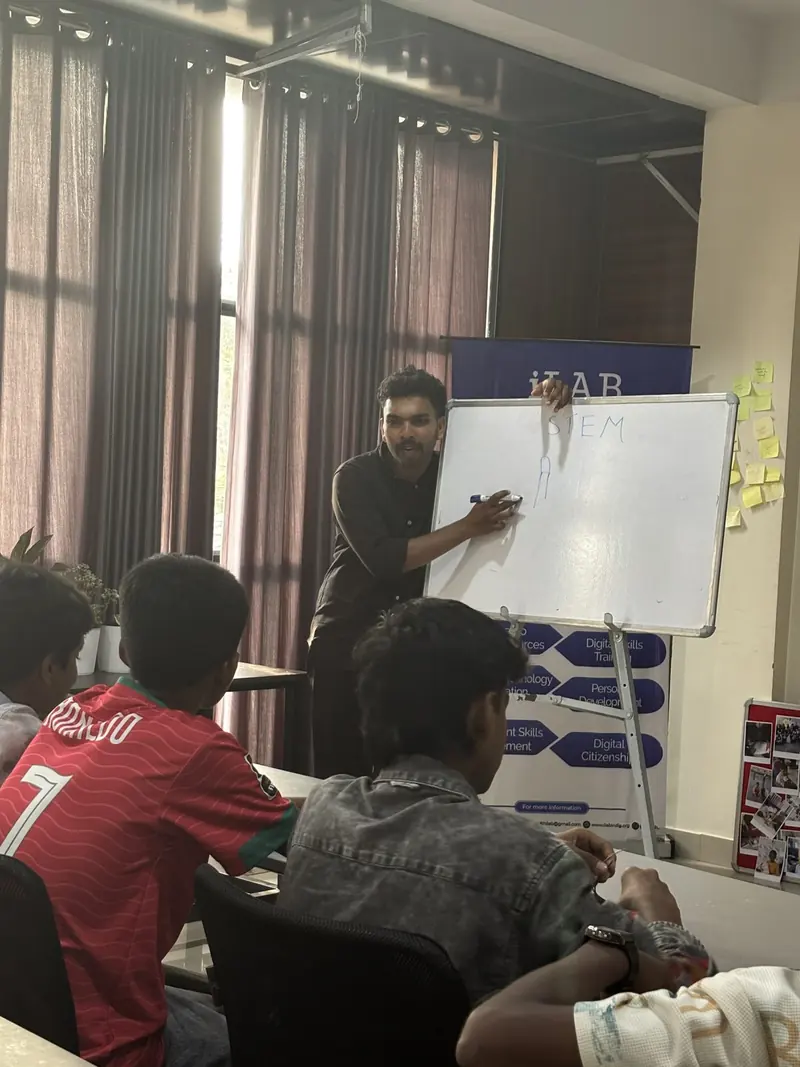
Over seven sessions we added one thing at a time. A motor. A battery with more push. Wires that had to go somewhere on purpose. Every new part brought its own way of going wrong, and sorting it out was the real lesson each time.
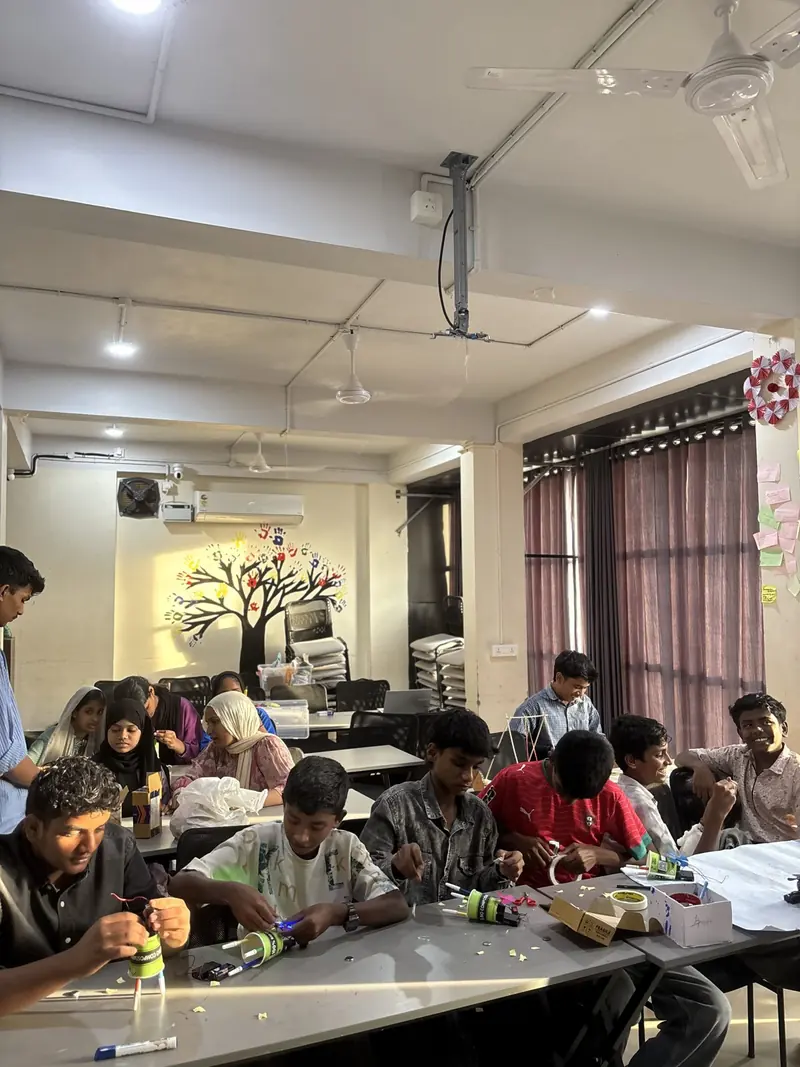
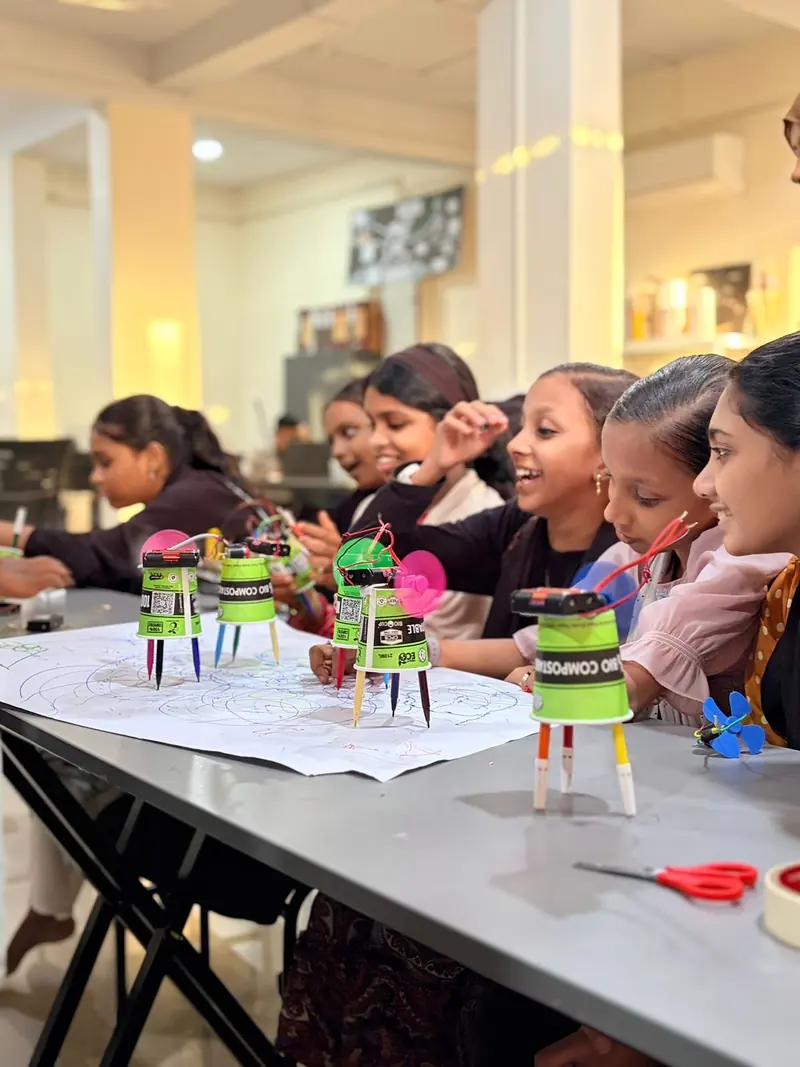
Then came the Scribble Bot. A cup, a small motor, a few markers for legs. Put something lopsided on the motor shaft and it can't spin cleanly, so the whole cup shakes, and the shaking drags the markers across the paper.
It can't lie either. If the circuit is right, there's a drawing. If there's no drawing, you go back and look. The paper keeps the record.
And the drawings never come out the same. Same cup, same motor, same battery, and every bot still wanders off its own way. Ninety-seven students, and I doubt any two sheets matched.

I used to think teaching electronics meant explaining it well. Watching those bots, I'm less sure. Explaining helps. What stays with people is the moment something they built does a thing they didn't fully plan, and they have to work out why.
That's the loop I care about. Build it, watch it go wrong, understand a little more, build it again. A coin cell and an LED is where it starts. A cup scribbling on paper is the same idea, just louder.