Event
A Repair Café for Hospital Devices
For Open Source Hardware Month, TinkerSpace Calicut and IEDC at Government Medical College Kozhikode opened up condemned hospital devices to see how they fail. One patient monitor came back to life.
- Date
- Place
- TinkerSpace Calicut
- Topic
- Medical device repair
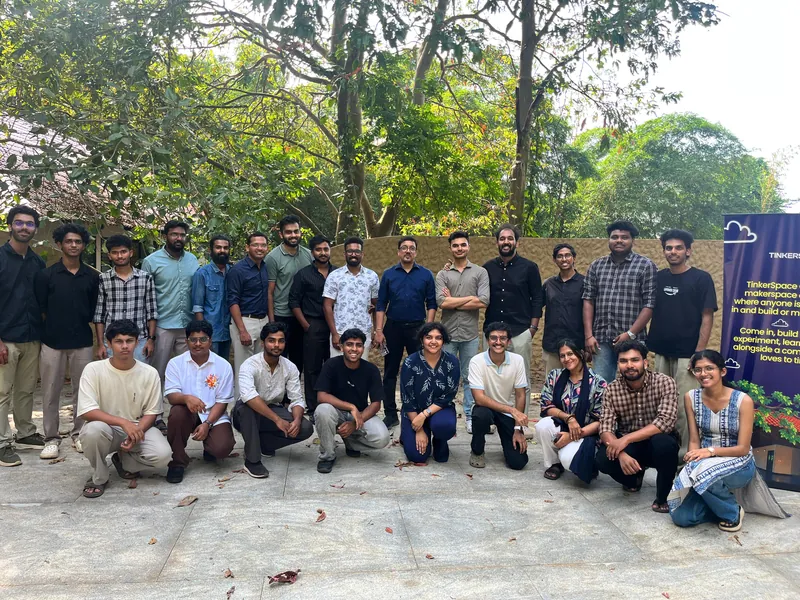
October is Open Source Hardware Month, and it's also the month of World Repair Day. Both rest on the same stubborn idea: if you own a thing, you should be allowed to open it, understand it and fix it.
On 18 October, seventeen years to the day after that first café, we tried that idea on the hardest objects we could find. TinkerSpace Calicut teamed up with IEDC at Government Medical College Kozhikode for a Medical Repair Café. The hospital brought condemned devices, machines that had been declared dead and set aside. Our job was to take them apart, work out how they worked, and see if any could be brought back.
The bench was an unusual mix. Medical students who use these machines but had never seen inside one. Computer science and electrical engineers and makers from the TinkerHub community, who knew the electronics but not the ward. The iHub Biomedical team, who know both. Nobody in that room could have done it alone.
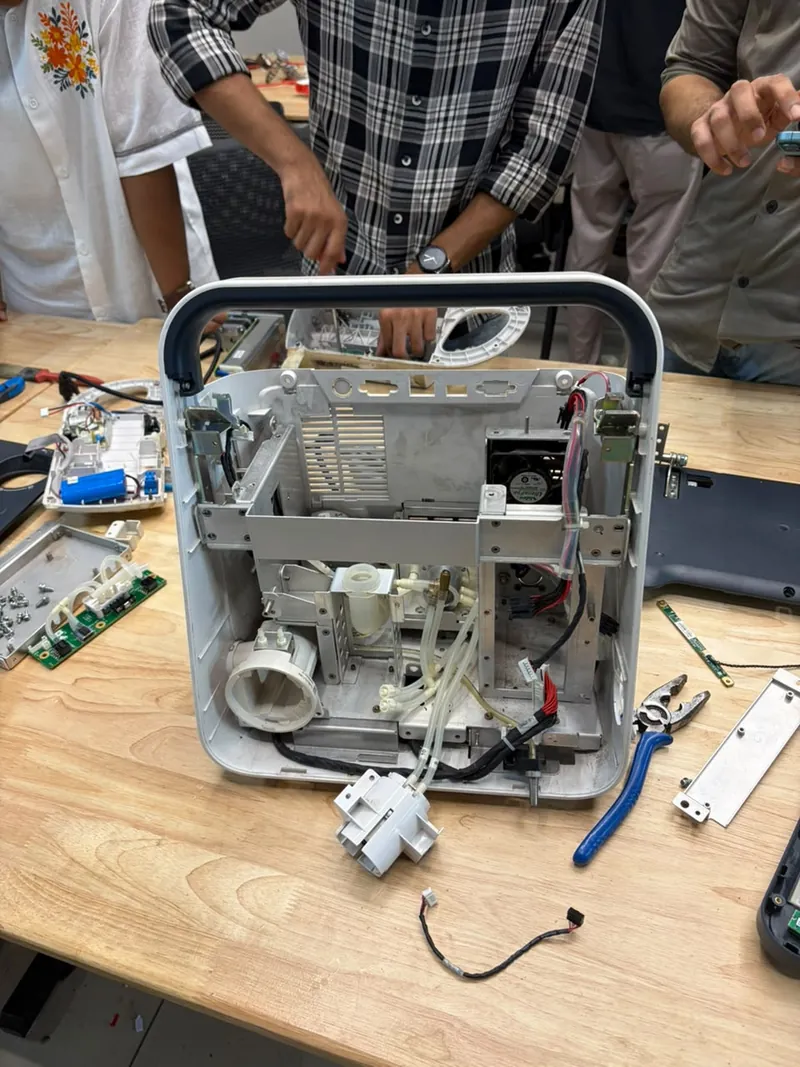
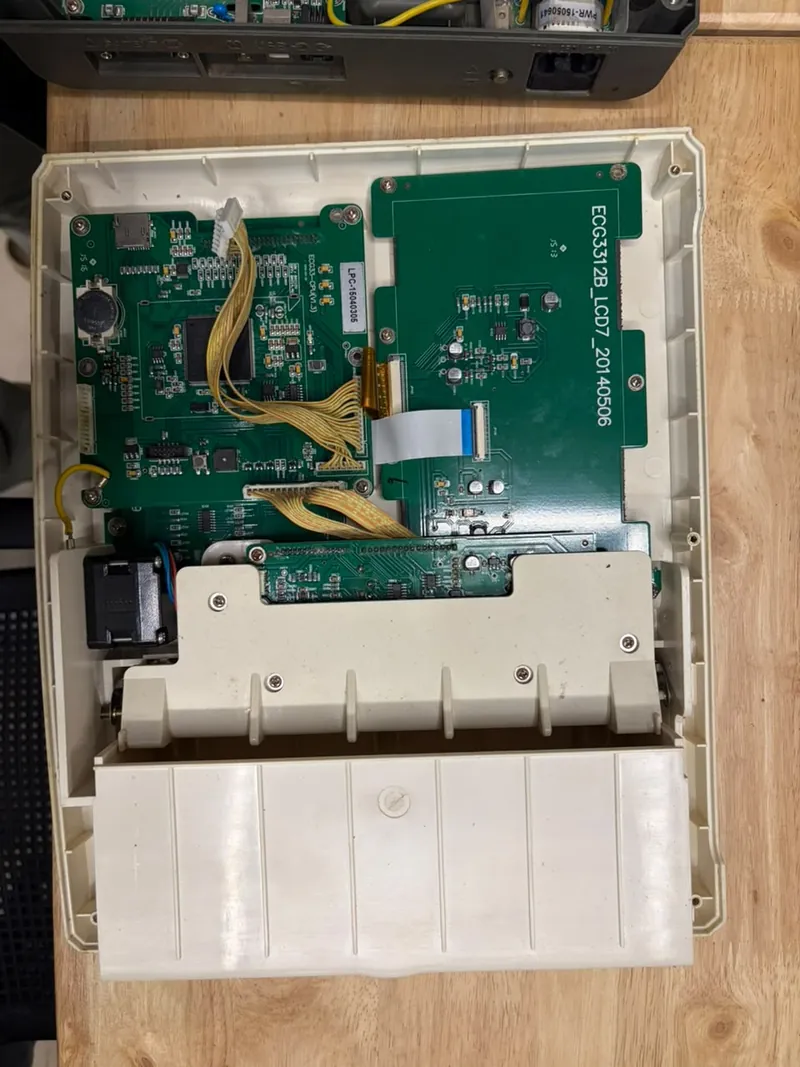
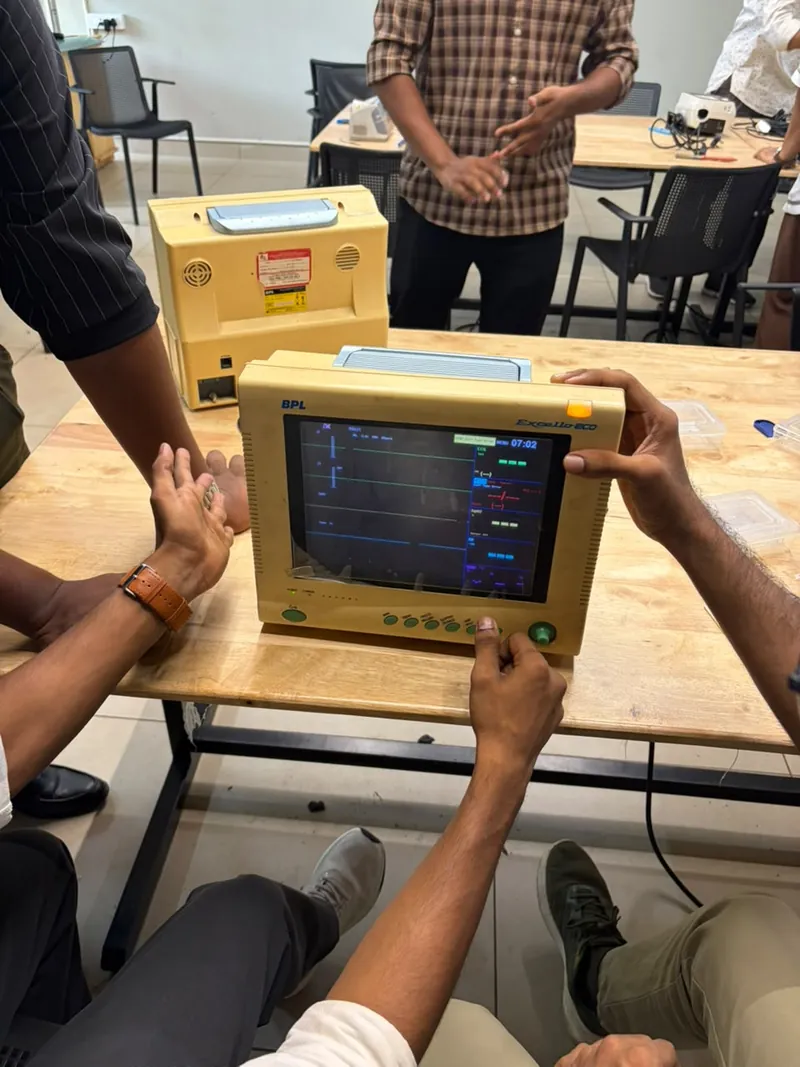
The first win was a BPL patient monitor. It powered on, showed its logo, and went no further. Nothing looked broken. The team suspected micro-cracks in the solder joints, too small to see, the kind that years of pump vibration and cuff stress can cause. So they applied flux, reflowed the board with a hot-air rework station, and rechecked the capacitors with a multimeter.
Then they switched it on. It went past the logo and showed live vitals.
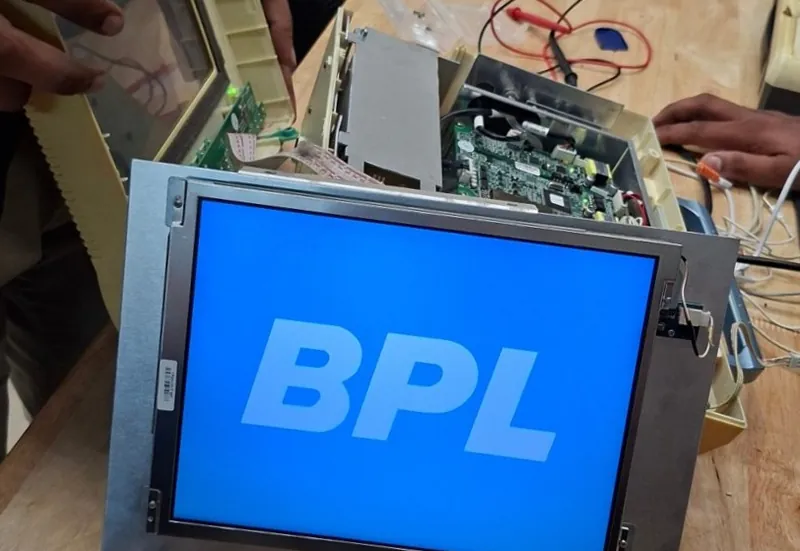
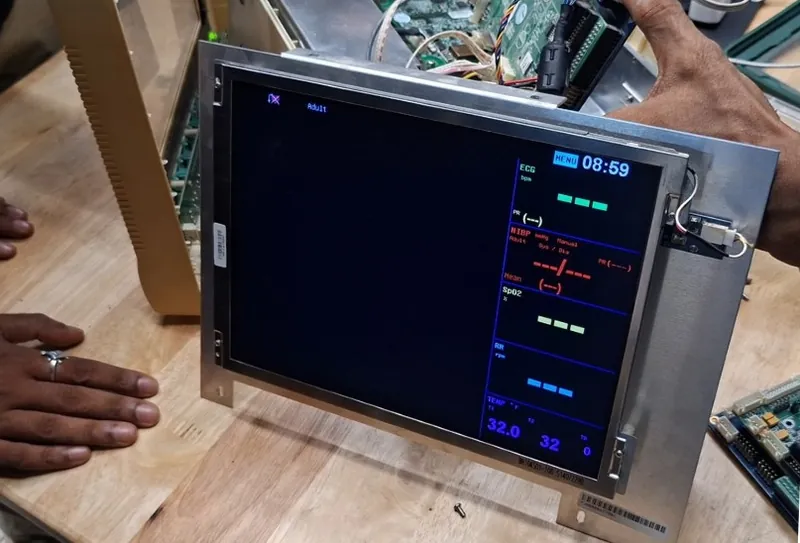
I keep coming back to that one. A machine written off as dead turned out to be a few tired joints. It wasn't beyond repair. It was beyond anyone having the time, the tools and the permission to look.
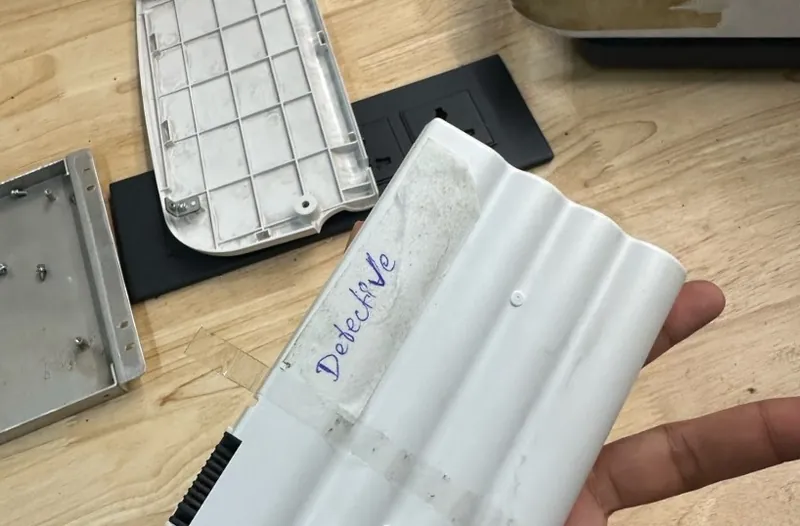
The Mindray SV300 ventilator was harder. We found two faults, one in the display and one in a motor inside the gas-supply unit, and neither had a quick fix. But opening it showed us something else. The intake filter was grey with dust. The battery had "Defective" written on it by hand, on a strip of tape. Someone had noticed. The ventilator still ended up condemned.
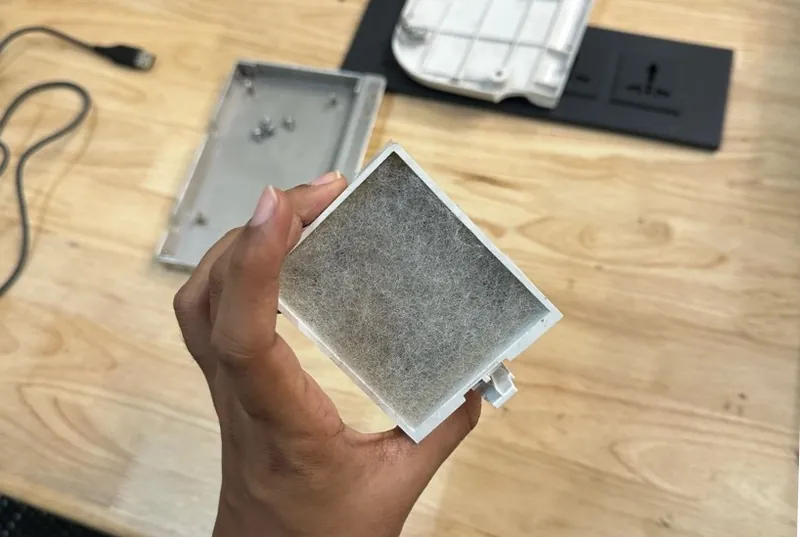
Smaller things got fixed too. A nebuliser. An old BP cuff, glued back to life. NIV filters, dusted and cleaned. The electrical engineers opened a pulse oximeter sensor just to see how it worked, which is how most of us learned anything in the first place.
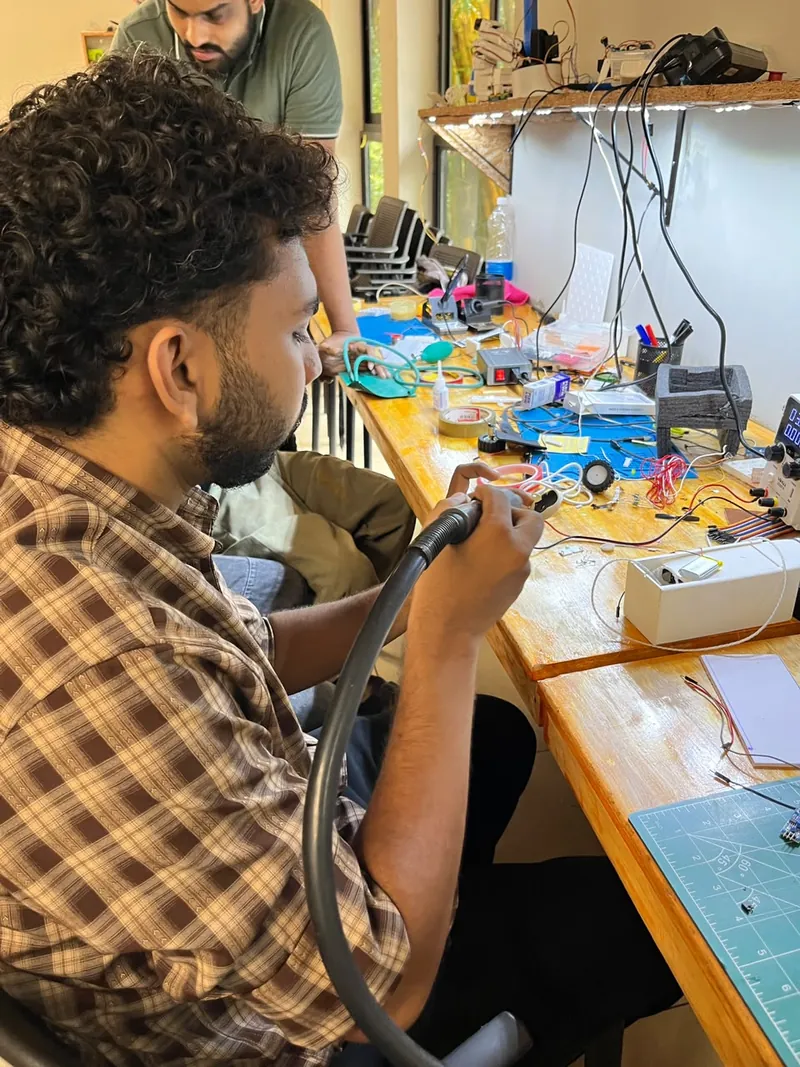
By the end of the day, the conversation had moved from devices to systems. Many of the machines had no record of servicing or maintenance contracts. Donated devices often never get registered with the biomedical team, so they fall outside maintenance and warranty from the start. Basic care, like changing a filter, isn't something most healthcare workers are trained in. And calibration is expensive, which leaves an uncomfortable question about how much of it actually happens.
Someone summed it up in one line:
We look after our phones and computers better than the devices patients depend on.
This won't be the last one. Every condemned device is a lesson in how real equipment ages and fails, so we want more repair cafés and teardown labs. Further off, we'd like a biomedical community in Malabar, where clinicians, engineers and makers build devices that are cheaper, local and made to last.
Open hardware usually means schematics and code shared online. That day it meant something simpler: a room full of people who decided that a machine being condemned isn't the same as a machine being understood.