Session 8
Giving the Dispenser a Body
The water dispensers worked. They just looked like a tangle of wires. This session was about the box, and about how a working thing still isn't finished until someone else can use it.
- Date
- Place
- Skill Hub
- Topic
- Design
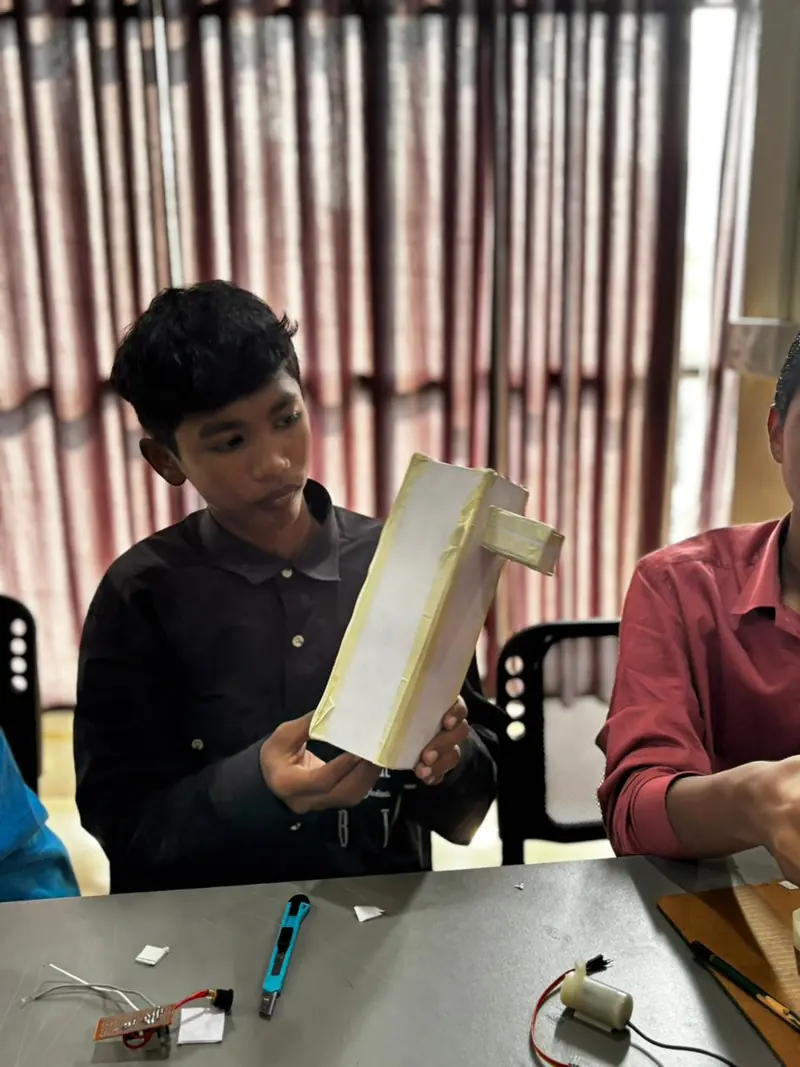
Last session ended with working dispensers. A hand came close, water came out. Success.
But nobody would put one of those in their kitchen. Wires everywhere, a pump sitting loose, a sensor dangling off the edge of the table. It worked, and it wasn't finished.
So this session was about the body.
We started with design thinking: who is this for, what do they need, what could it look like. Then sketches before scissors. It's tempting to skip straight to cutting, and I understand why. Drawing first feels slow. But a sketch costs a pencil line to fix, and a cut sheet doesn't.
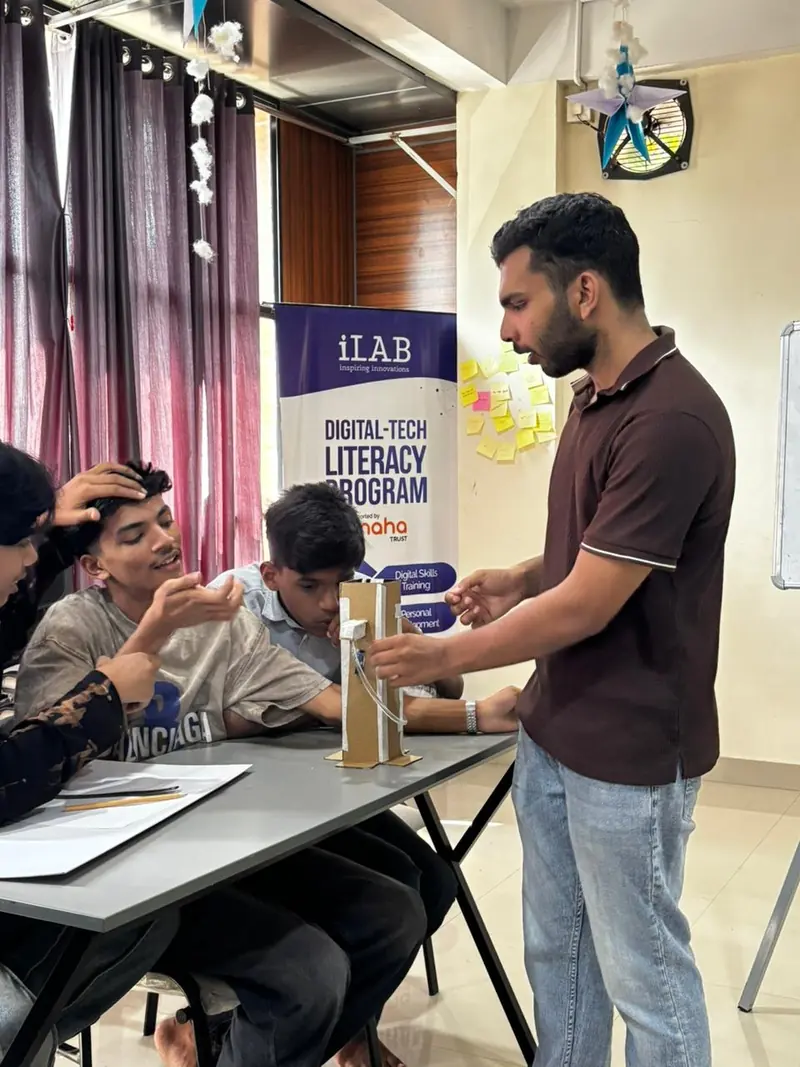
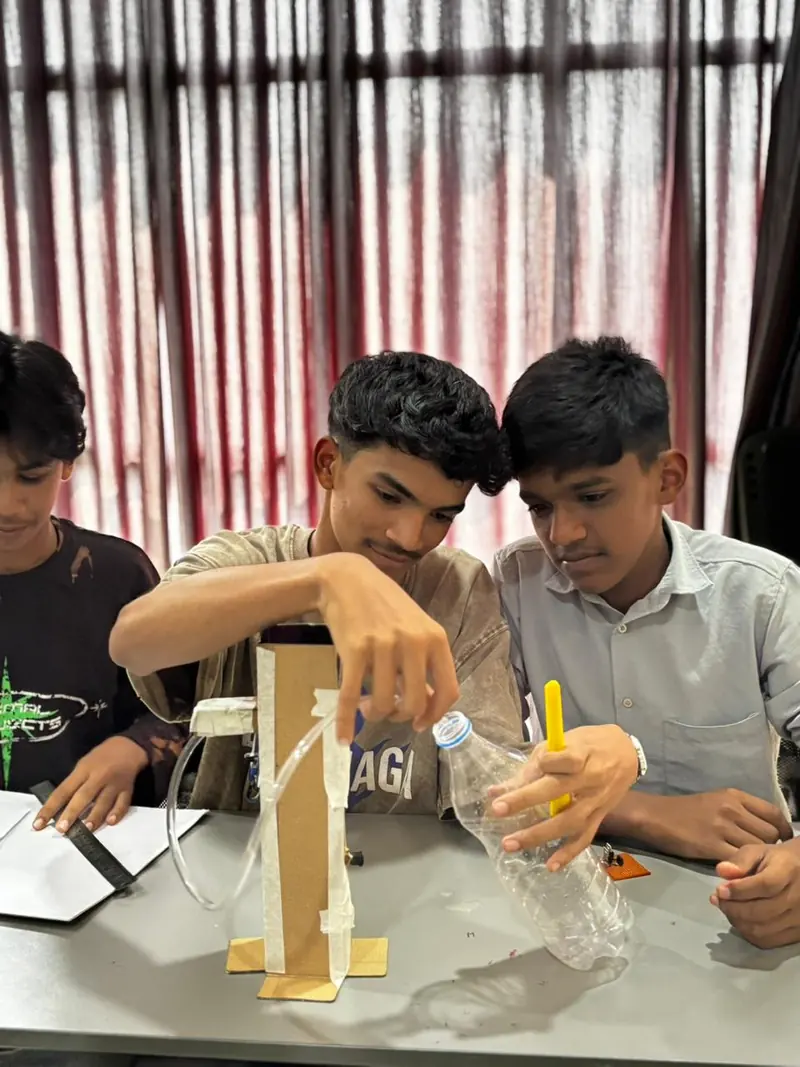
Then the real work. Measuring and cutting sheets for the frame. Mounting the pump so it wouldn't rattle loose. Placing the IR sensor on the front panel.
That last one taught the most. Tuck the sensor slightly behind an edge and a circuit that worked perfectly last session can go blind. Nothing in the electronics changes. The box was in the way. The enclosure isn't just decoration. It can make or break the thing inside it.
Then came colour, shapes and decoration. Every team's dispenser ended up looking like its makers.
I think this session matters more than it looks. A lot of engineering stops at "it works." But working is only the halfway point. Finished means someone who didn't build it can walk up and use it without a guide. Every team left with something that passed that test.