Session 5
Periscopes and Kaleidoscopes
No batteries, no code. Just cardboard, mirror tiles and one rule about light, which turned out to be enough to see around corners and make patterns that never repeat.
- Date
- Place
- Skill Hub
- Topic
- Making
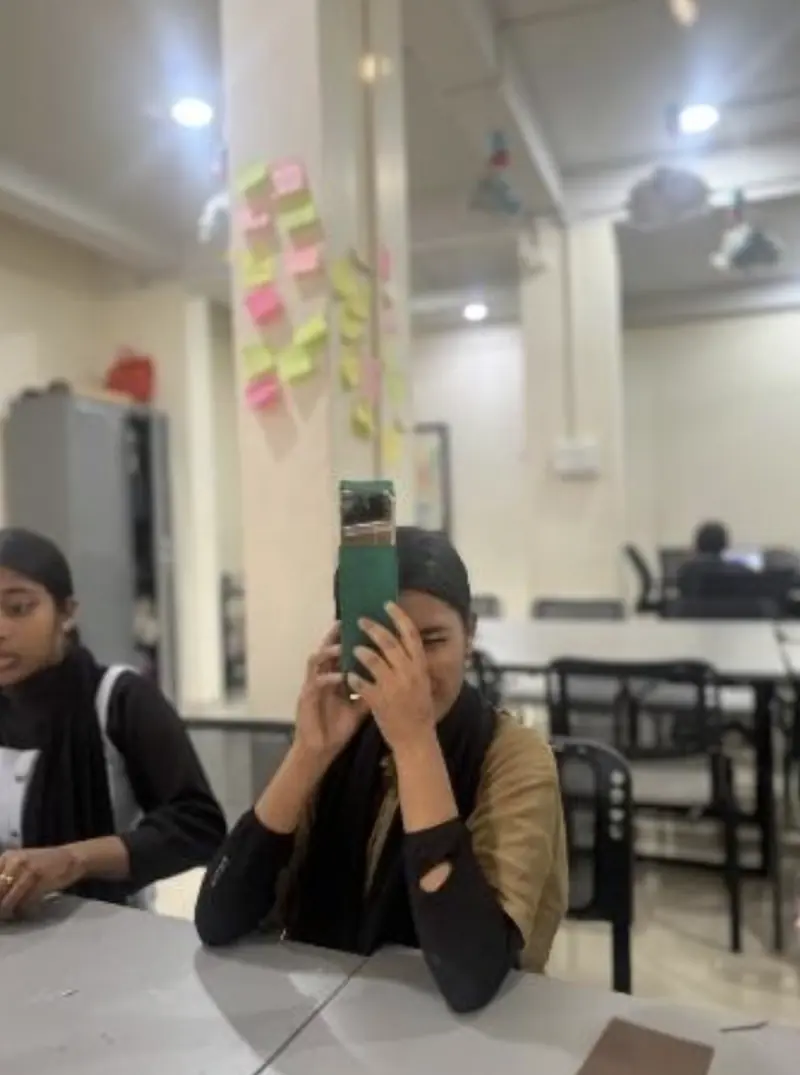
After four sessions of wires and LEDs, we put the electronics away completely.
Light follows a rule older than any circuit we'd built: it leaves a mirror at the same angle it arrives. That's it. One sentence. And from that single sentence you can build two very different machines.
The periscope is the practical one. Two mirrors at 45 degrees inside a cardboard tube, and suddenly you can see over a wall or around a corner. Submarines use the same idea, which got a reaction. Something you made from a box in a classroom shares its thinking with a submarine.
The kaleidoscope is the opposite. It isn't for seeing anything in particular. Mirrors facing each other take a few scraps of colour and turn them into patterns that keep changing as you turn it. Order out of a mess, using the same rule.
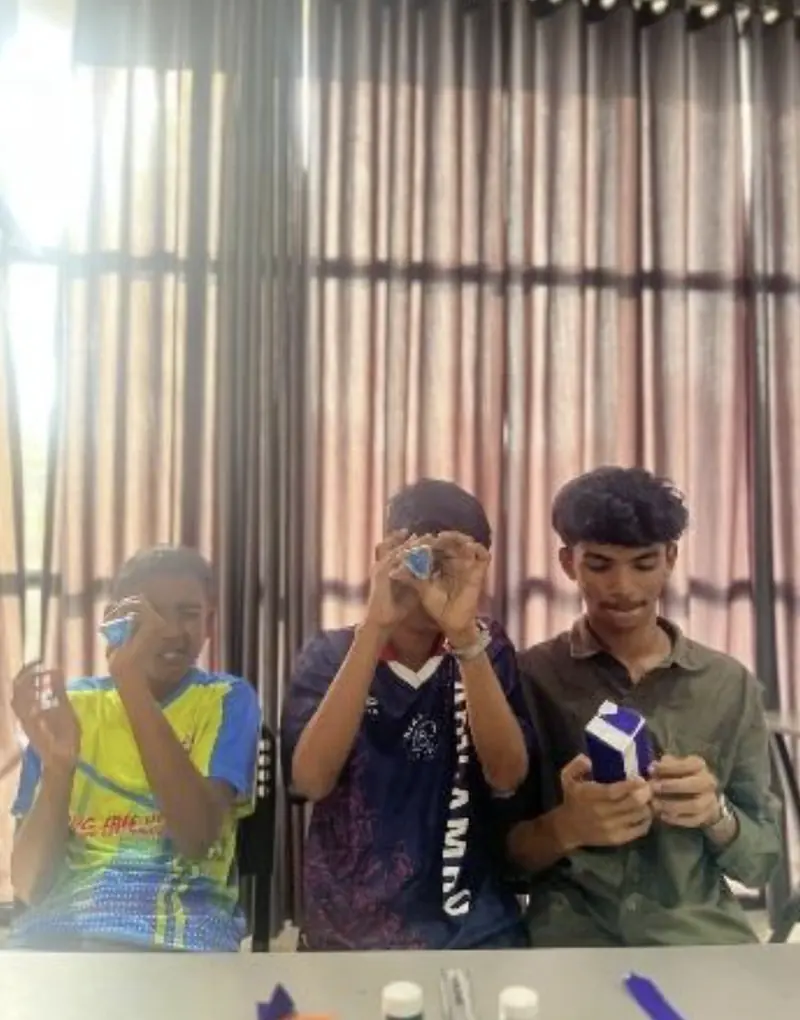
I like that pairing a lot. One rule, and depending on how you arrange it, you get a tool for looking outward or a toy for looking at beauty. Physics doesn't care which one you build.
Getting the angle right mattered more than anything else. Off by a little and the periscope shows you the inside of the tube. Students tested theirs from different heights, adjusted, tested again. There's no code to blame here. Just your own folding.
Every model ended up decorated differently. Same cardboard, same mirrors, same rule, and still nobody's looked like anyone else's. It's a small reminder that following the laws of physics exactly still leaves plenty of room to be yourself.