Session 3
IR Sensors That Notice a Hand
An IR sensor, an LED and a buzzer. For the first time, the circuit stopped waiting for us and started reacting to the room.
- Date
- Place
- Skill Hub
- Topic
- Sensors
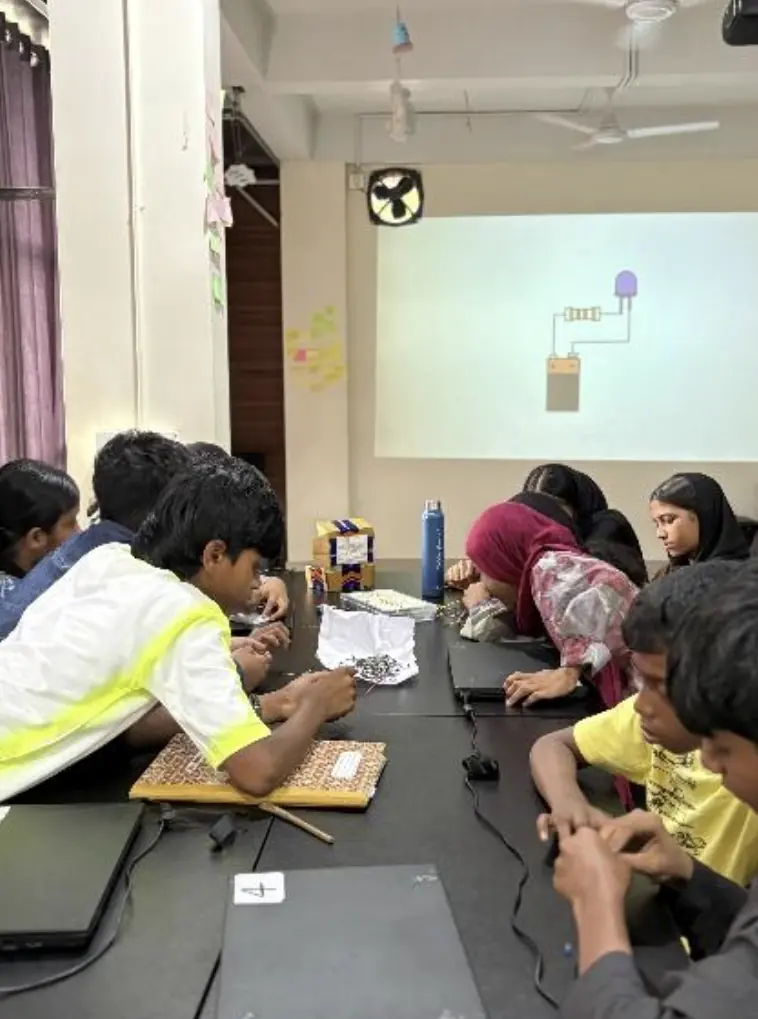
Up to this point, every circuit we built did exactly one thing: whatever we told it, whenever we told it. Press upload, it blinks. Change the code, it blinks differently.
An IR sensor breaks that pattern. It sends out light you can't see and watches for it to bounce back. Put a hand in front of it and the circuit knows. Nobody pressed anything.
We started small. Hand comes close, LED turns on. Then a buzzer. Then both together, which is already an alarm system if you squint a little.
The moment it made sense wasn't the explanation. It was a hand moving toward the sensor and the LED reacting on its own. There's a small shift when you realise the thing on your desk is responding to the world now, not to you.
Then we opened the Serial Monitor, and the sensor's view of things showed up as numbers on the screen. That part fascinates me. The circuit doesn't see a hand. It sees a value change. Everything we'd call noticing, for a machine, is just a number crossing a line someone chose.
That's worth sitting with. Every automatic door, every tap that runs when you hold your hands under it, is a decision about where that line goes. Someone picked it. Today, the students did.
It also made me think about attention in general. A sensor only notices what it was built to notice. Most of us are a bit like that too.